

 By
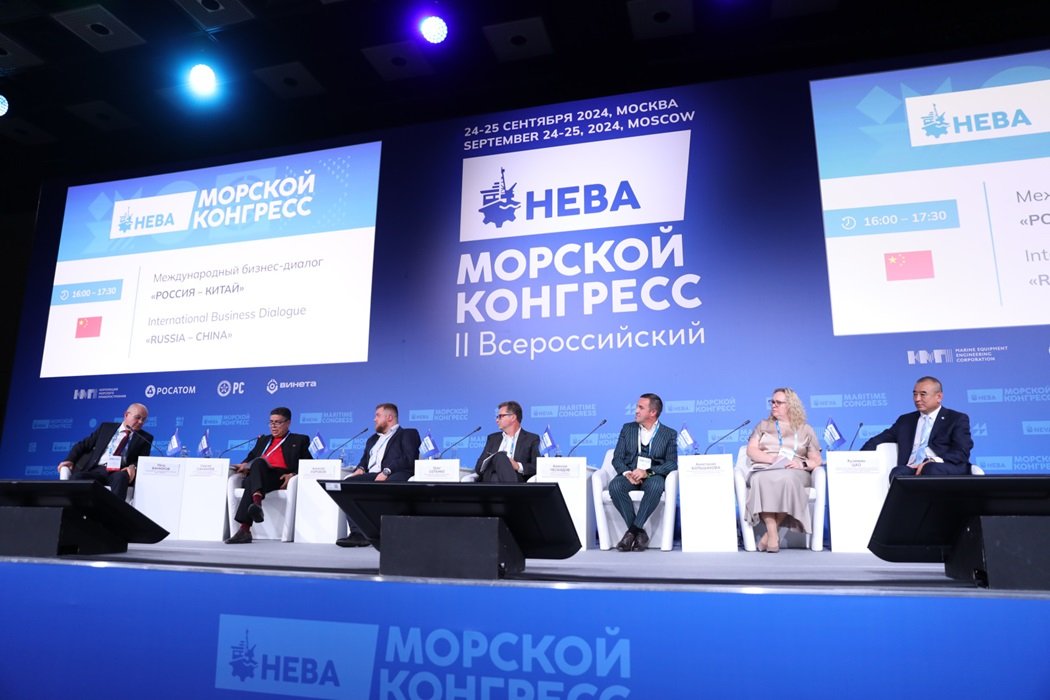
By The Maritime Congress Russian Far East convened at Far Eastern Federal University in Vladivostok, bringing together the top executives of Russia’s shipping, ports, and Arctic industries. The central focus: the Northern Sea Route and the Trans-Arctic Transport Corridor — a multimodal system linking Vladivostok, with its direct access to Asian ports, to St. Petersburg and onward to Europe, via Siberian rivers and rail networks.
Key announcements
- JSC Rusatom Arctic reported the successful completion of the Chukotka navigation run in October 2025 — the first time in five years that cargo arrived before ice formation.
- JSC Rusatom Arctic and SCF Group jointly announced their intention to open year-round navigation on the NSR in the 2026–2027 season.
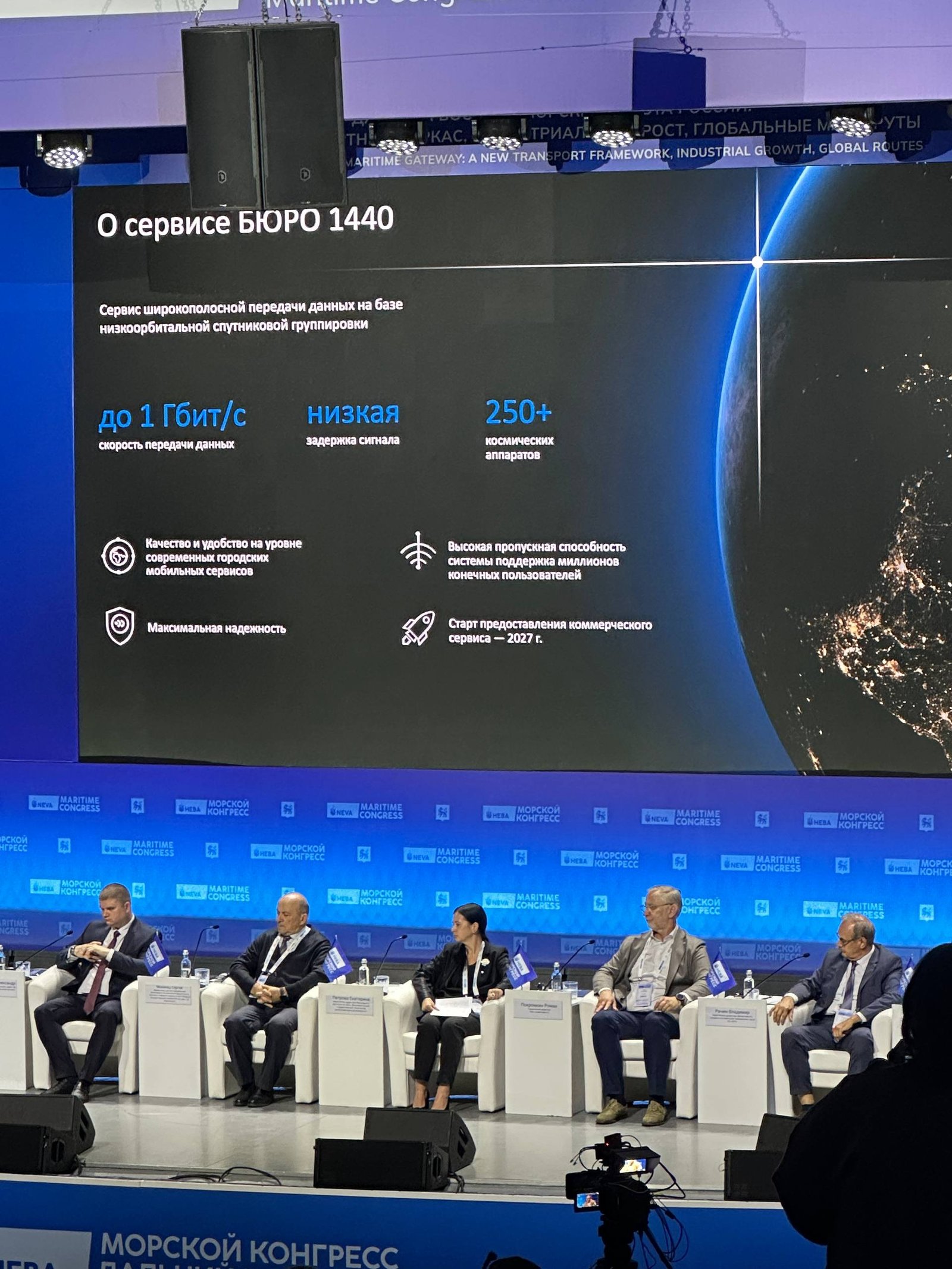
- Russian developer BURO 1440 confirmed NSR satellite coverage reaching 70% of daily operating time by end of 2026 — Russia’s own answer to Starlink.
- Gazprombank (Bank GPB) disclosed that its total financing of NSR and Trans-Arctic Corridor projects since 2018 has exceeded 1 trillion rubles — approximately $12 billion.
- The flag-raising ceremony for the Kerch Strait, a new Arctic rescue vessel built by the United Shipbuilding Corporation (JSC “United Shipbuilding Corporation”), took place on the congress floor.
The numbers
According to figures presented at the congress, 2025 delivered clear momentum. SCF Group deployed 31 vessels on the NSR — a 35% year-on-year increase — completing 52 voyages in the eastern sector and carrying 6.1 million tonnes of hydrocarbons. Eastbound volumes reached 2.3 million tonnes, up 28% on 2024. The Northern Sea Route has stopped being an experiment.
Ilya Sinenko, expert at the Center for Applied Oriental Studies at Far Eastern Federal University, put the shift in regional context:
“We are seeing the statements made over the past 10–15 years about the NSR as an alternative to routes through the Indian Ocean and the Suez Canal begin to materialise in practice. This is happening both because of forced circumstances — disruptions to safe navigation in the Red Sea and the Bab-el-Mandeb Strait — and because of growing interest among Asian states in alternatives to projects promoted by Western countries, including in transport. The classic argument for the NSR as a shorter route between, say, Busan and Rotterdam, can now be supplemented by the tangible prospect of year-round navigation and by demand for Russian LNG projects — Yamal LNG and Arctic LNG-2. Despite ongoing fluctuations in year-on-year volumes, the geopolitical climate and economic calculation have already brought the NSR to the point where a sufficient number of countries — including, at the state level, countries with complex relations with Russia, such as South Korea — regard it as a credible second option for maritime freight from Asia to Europe.”
Ilya Sinenko, expert, Center for Applied Oriental Studies, Far Eastern Federal University
No longer an experiment
In December 2025, the Alexey Kosygin — Russia’s first domestically built LNG carrier — completed its maiden Arctic voyage and went on to prove itself during the winter navigation of 2026. The vessel was built at the Zvezda shipyard in Bolshoy Kamen on Russia’s Pacific coast. It is the lead ship of a series: the second hull is in final construction, the third is due before end of 2026.
Following that first successful navigation season, SCF Group confirmed that year-round NSR service will operate in 2026–2027, with four companies sharing responsibility: SCF Group, NOVATEK, JSC Rusatom Arctic, and the Ministry of Transport.
Another concrete symbol of the shift: the first delivery of 159,200 tonnes of cargo to Chukotka in October — the first time in five years that the northern supply run was completed before ice formation. Alexander Lazarenko, First Deputy CEO of JSC Rusatom Arctic, reported the result directly at the congress.
Immediately during the congress, JSC Rusatom Arctic and Chukotsnab signed a three-year supply contract for coal and petroleum products to the Chukotka Autonomous Region. The operator has committed to delivering approximately 264,000 tonnes of cargo across three regions in 2026 — Chukotka, Khabarovsk Krai, and the Republic of Sakha (Yakutia) — and is ready to expand to two additional regions this year.
The fleet
The priority issue is fleet ageing — and JSC Rusatom Arctic addressed it head-on. The official figure: 61% of the northern supply cargo base — 1.17 million tonnes — is carried by vessels averaging 24.8 years old.
“We assess this situation as a risk, but we are making maximum efforts to ensure we never face a scenario where our fleet fails. First step: the unified maritime operator is moving toward the status of a shipping company. Second: acquisition of tankers on the secondary market. By 2027, two tankers are planned for purchase, along with a preliminary design for a serial ice-class tanker with a deadweight of 25,000–31,000 tonnes. In 2028: construction of a new PV27-type vessel ordered by GTLK (State Transport Leasing Company), construction on partner shipyards, and if necessary — additional purchases and fleet condition programmes.”
Alexander Lazarenko, First Deputy CEO, JSC Rusatom Arctic
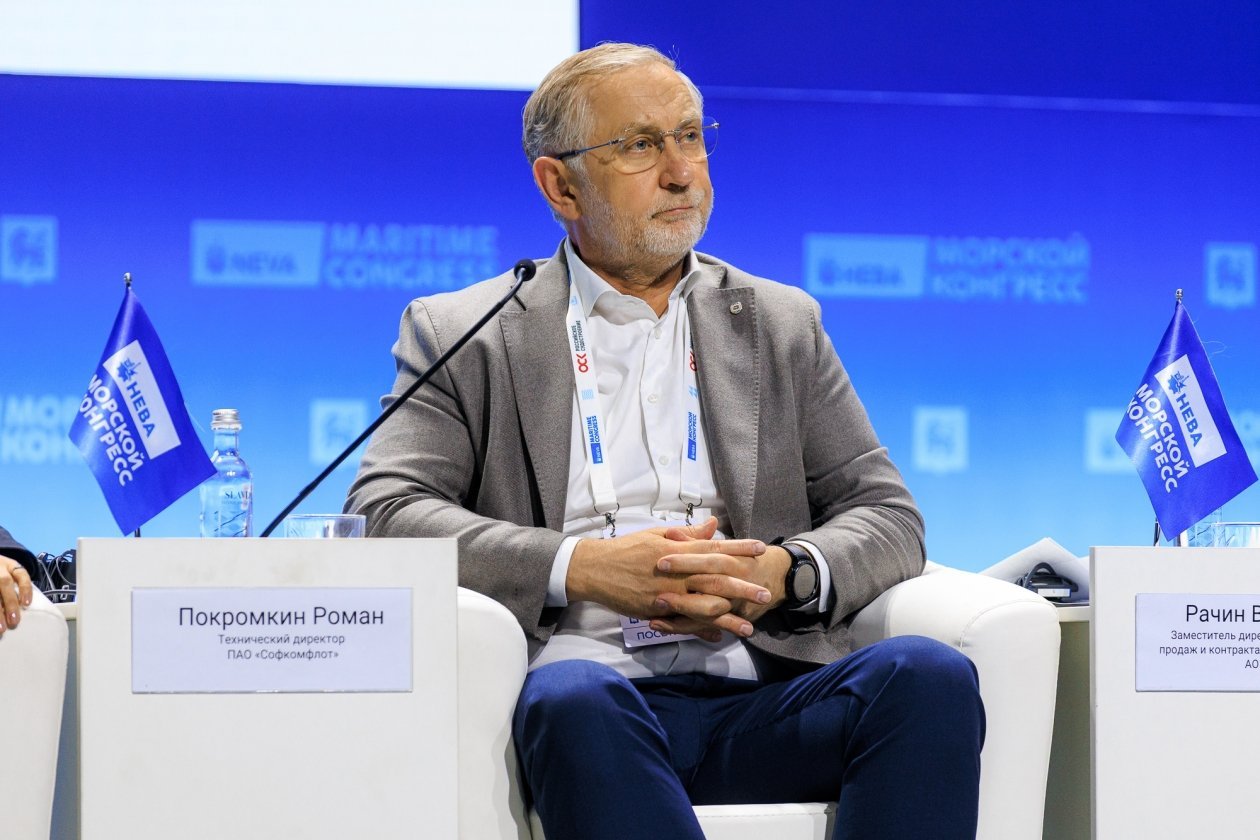
On the shipbuilding side, Vladimir Rachin, Deputy Director of the Sales and Contracting Department at United Shipbuilding Corporation (USC), confirmed that 31 vessels are currently in active production. The revised demand forecast stands at 60 ice-class vessels needed by 2035 — down from an original estimate of 131, reflecting a recalibration to actual cargo growth rates rather than the ambitious 80-million-tonne presidential target, which was met at less than half by 2024.
“We are capable of building any vessel. Under any conditions. The Krylov State Research Centre — Russia’s principal shipbuilding institute — is right now developing the first fully Russian-designed LNG carrier. All icebreakers we have launched this year will be delivered. There are no problems with them. To scale up production, we are already in negotiations and conducting due diligence on acquiring a new shipyard in Primorye. If demand grows sharply, we are ready to modernise Severnaya Verf.”
Vladimir Rachin, Deputy Director, Sales and Contracting, United Shipbuilding Corporation (USC),
The congress also marked the flag-raising ceremony for the Kerch Strait — a multifunctional Arctic rescue vessel built by USC with an Icebreaker 6 class rating. The vessel carries a 32-tonne crane and a video surveillance system capable of detecting objects and oil spills in difficult weather conditions. It took 15 years to build — and it sailed on the day of the congress.
Financing
Gazprombank Vice-President Mikhail Zavyalov confirmed that the bank’s total financing of NSR and Trans-Arctic Corridor infrastructure since 2018 has exceeded 1 trillion rubles. Since that year, the bank has designated all NSR projects as priority and built a portfolio targeting Arctic port infrastructure.
The financial model operates on multiple levels simultaneously: the State Transport Leasing Company programme provides subsidised leasing for vessels, port equipment, and Arctic hardware — and where leasing frees up capital on operators’ balance sheets, they take on commercial credit on top. Rates are tied to the Central Bank key rate and cannot go lower, but the bank actively manages them within that constraint.
“We are publicly calling on our partners — banking organisations, investors — to jointly develop the NSR and the Trans-Arctic Corridor as a critically important geopolitical and strategic project.”
Mikhail Zavyalov, Vice-President, Gazprombank (GPB)
Gazprombank has explicitly stated its openness to co-investment partnerships, including with international banking institutions.
Russia’s own Starlink — for the Arctic
One of the congress’s standout announcements came from Alexei Drozhzhinov, Head of Sales at BURO 1440. The company signed several contracts for satellite communications services starting from 2028 — directly on the congress floor.
Since 2022, BURO 1440 has been building Russia’s answer to Western sanctions and Starlink: a low-orbit broadband satellite constellation designed specifically for the Arctic and the NSR, where conventional geostationary satellites are ineffective due to their viewing angle. By 2024, the Rassvet-1 and Rassvet-2 missions had been launched from the Vostochny and Plesetsk cosmodromes, with 5G NTN protocols and inter-satellite laser links successfully tested.
The company confirmed at the congress: by end of 2026, the system will operate over the NSR corridor for 70% of daily time — not geographic coverage, but daily operating capacity over the route. Full commercial service begins in 2028.
Created and verified by Anna Derkach,
Global journalist, Spokesperson of The Center for Applied Oriental Studies at Far Eastern Federal University
+79510005409 (available in any international messengers)
Reported from the Maritime Congress Russian Far East 2026, Vladivostok, May 27–29, 2026. Far Eastern Federal University campus, Russky Island.